Green Transport Revolution: Eco-Friendly & Electric Buses in Kuwait (2025 Guide)
Kuwait is going green! Explore the new fleet of electric KPTC buses and CityBus low-emission vehicles transforming public transport in 2025.
By Rifat Hossain
Kuwait’s streets are getting quieter and cleaner. In a significant move towards sustainability, the country’s bus sector is transitioning to greener fleets. Led by the Kuwait Public Transport Company (KPTC) and CityBus, these upgrades are part of a larger national strategy to modernize urban mobility and reduce carbon emissions.
If you are a daily commuter or a visitor, here is what you need to know about the eco-friendly changes happening right now.
 Share with FnF!
🌿 Why "Green Buses" Matter in Kuwait
The push for green transport isn't just a trend; it is a key part of the national Urban Public Transport Planning project. This initiative aims to build a sustainable, low-carbon system that reduces reliance on private cars and improves air quality.
- Climate Goals: Kuwait has pledged a carbon-neutral oil and gas sector by 2050, with economy-wide neutrality by 2060.
- Health Benefits: With road transport accounting for nearly 17% of national air pollution, cleaner buses are a quick way to cut local emissions in dense areas like Kuwait City.
⚡ KPTC: Leading with Electric Buses
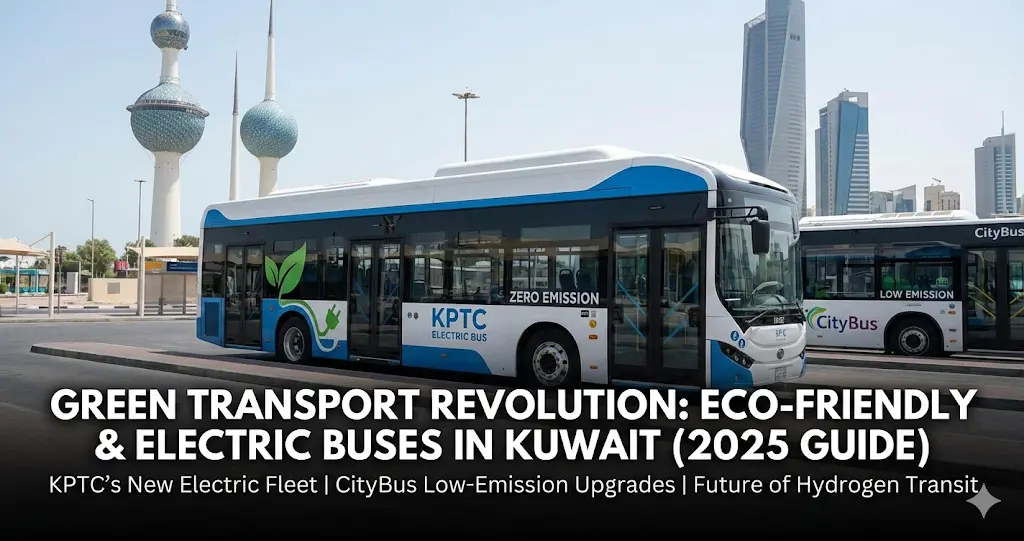
KPTC has made history as the first operator to deploy full-size electric public buses in Kuwait.
The First Electric Fleet
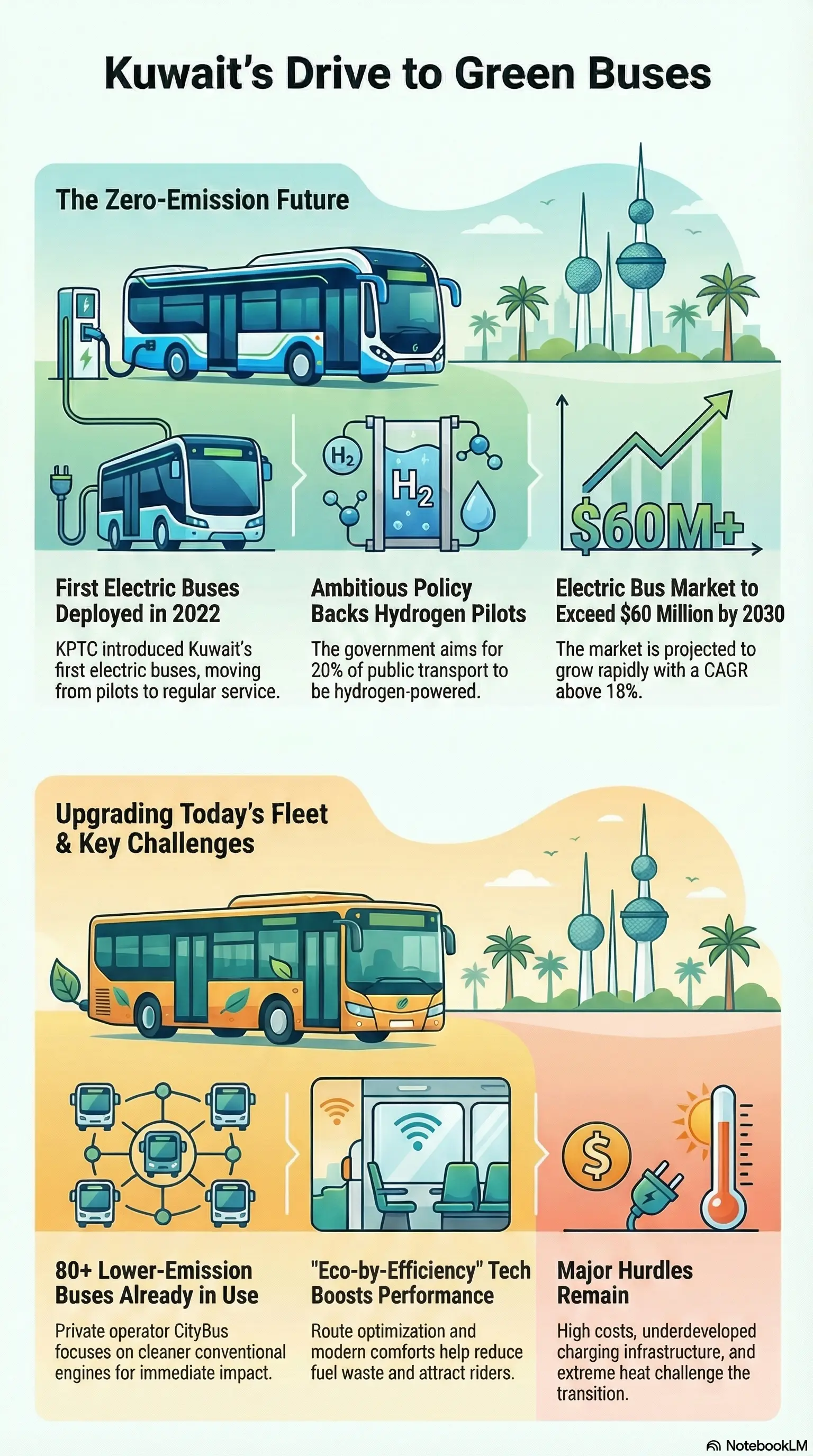
- Launch: The first batch of electric mass transit buses, manufactured by King Long, arrived in late 2022.
- Operations: These zero-emission buses have moved from symbolic pilots to regular service. For instance, a special "zero-emission service" was launched during Gergaian celebrations to showcase the technology.
- The Experience: Riders can expect a cleaner, significantly quieter journey compared to traditional diesel buses.
While specific electric route numbers are expanding, KPTC is actively integrating these vehicles into their main fleet to build public familiarity.
🚍 CityBus: Lower-Emission Upgrades
CityBus, the main private operator, has focused on upgrading its conventional fleet to be more environmentally friendly.
- Modern Fleet: CityBus operates over 500 air-conditioned buses across the country.
- Eco-Friendly Models: Approximately 80 of these are designated as "sustainable less carbon emission buses".
- Efficiency: These newer models use cleaner engines that meet higher emissions standards, reducing CO₂ per passenger compared to older stock.
These buses often serve high-demand routes, meaning your daily ride to work or the airport might already be on a lower-emission vehicle.
💧 The Future: Hydrogen Power
Beyond batteries, Kuwait is exploring hydrogen fuel-cell buses.
- Pilot Projects: A recent study values the Kuwait Hydrogen-Powered Bus market at roughly $150 million, with several pilot projects in planning.
- The Goal: The government aims for up to 20% of public transport vehicles to be hydrogen-powered in the near future.
- Challenges: Currently, infrastructure is the main hurdle, with limited refueling stations available.
📈 What This Means for Riders
For the average commuter, this shift brings tangible improvements in comfort and service quality.
- Cleaner Air: Electric and newer diesel buses reduce tailpipe emissions, directly improving air quality at busy stops.
- Better Comfort: New fleet additions often come with upgrades like better air-conditioning, LED lighting, Wi-Fi, and USB charging ports.
- Quieter Rides: The reduced noise from electric engines improves the urban soundscape for both passengers and pedestrians.
A Growing Market
The electric bus market in Kuwait is projected to grow by over 18% annually through 2030. This means you will likely see more electric buses on municipal routes, school transport, and airport shuttles in the coming years.
Whether you are taking a CityBus to the Avenues or a KPTC route to Maliya, the journey is slowly becoming greener, smarter, and more sustainable.