New Bus Routes Mowasalat Metro Station: Complete Guide to Facilities & Travel Tips
The 2022 Transformation: How Doha Built a World-Class Bus Network June 15, 2022.
By Rifat Hossain
The 2022 Transformation: How Doha Built a World-Class Bus Network
June 15, 2022. At 11:59 PM, the Al Ghanim Bus Station - the heart of Qatar's bus network for over two decades - permanently closed its doors.
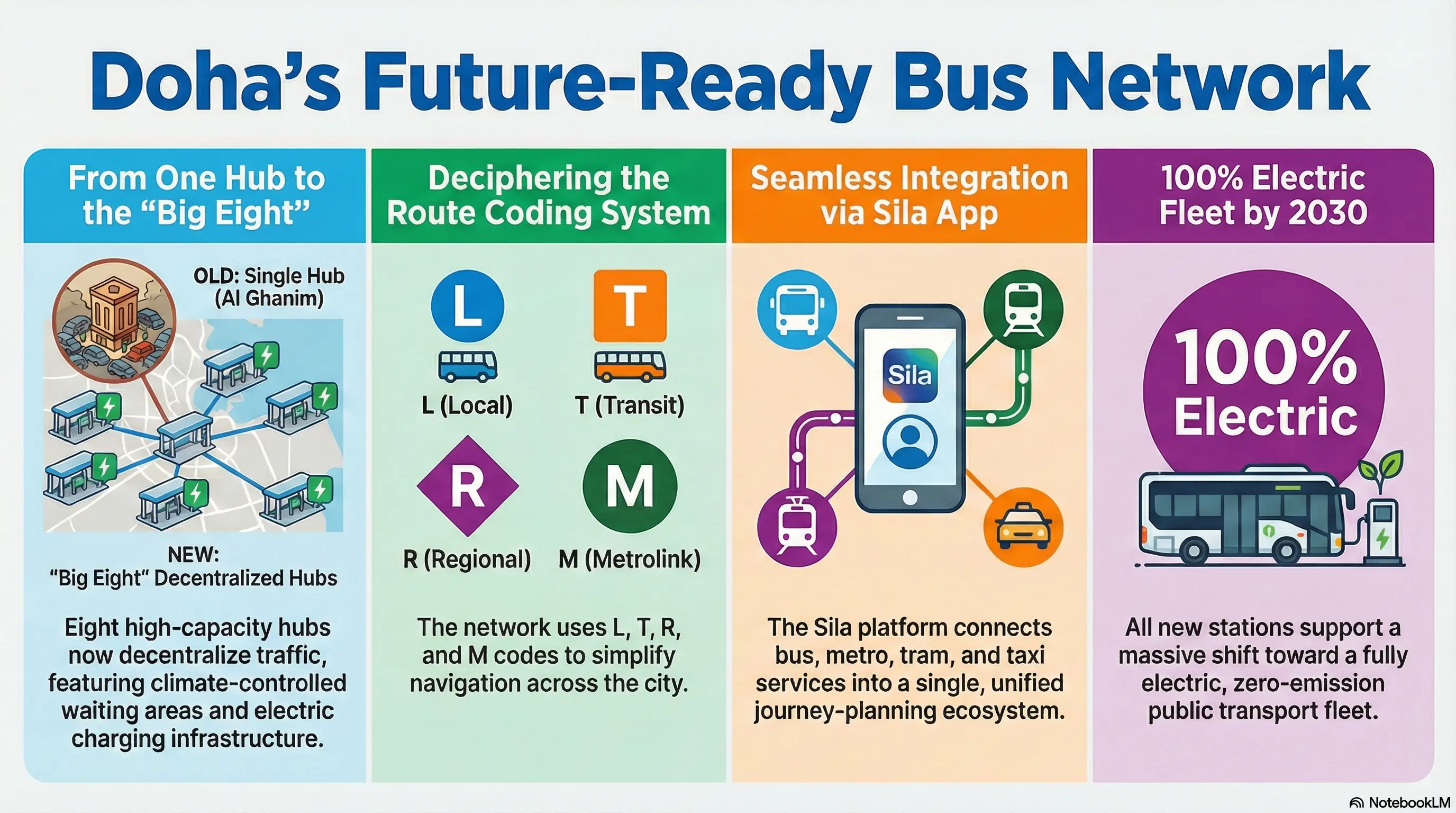
This wasn't just a station closing. It was the most significant restructuring in Qatar's public transport history - a bold move that replaced a centralized system with eight modern hubs and laid the foundation for today's integrated transport ecosystem.
Let's explore how this pivotal transformation reshaped Doha's transit landscape.
 Share with FnF!
🛑 The End of an Era: Why Al Ghanim Had to Close
What Al Ghanim Was
For over 20 years, Al Ghanim Bus Station was more than a transit hub - it was Qatar's bus network. Located in central Doha, this single station:
- Served as the sole major interchange for the entire country
- Handled all intercity routes to Al Khor, Al Wakra, Al Ruwais, and beyond
- Processed thousands of daily passengers through one increasingly congested facility
- Represented the old hub-and-spoke model inherited from early transit planning
The Problems That Couldn't Be Ignored
By the early 2020s, Al Ghanim's centralized model had become obsolete:
| Problem | Impact on Passengers |
|---|---|
| Severe Congestion | 30+ minute waits during peak hours |
| Long Detours | East-west travelers routed through central Doha |
| Poor Metro Integration | Difficult connections to the new Doha Metro |
| Inadequate Capacity | Facility couldn't handle growing passenger numbers |
| Limited Coverage | New developments (Lusail, Pearl) poorly served |
The Historic Day
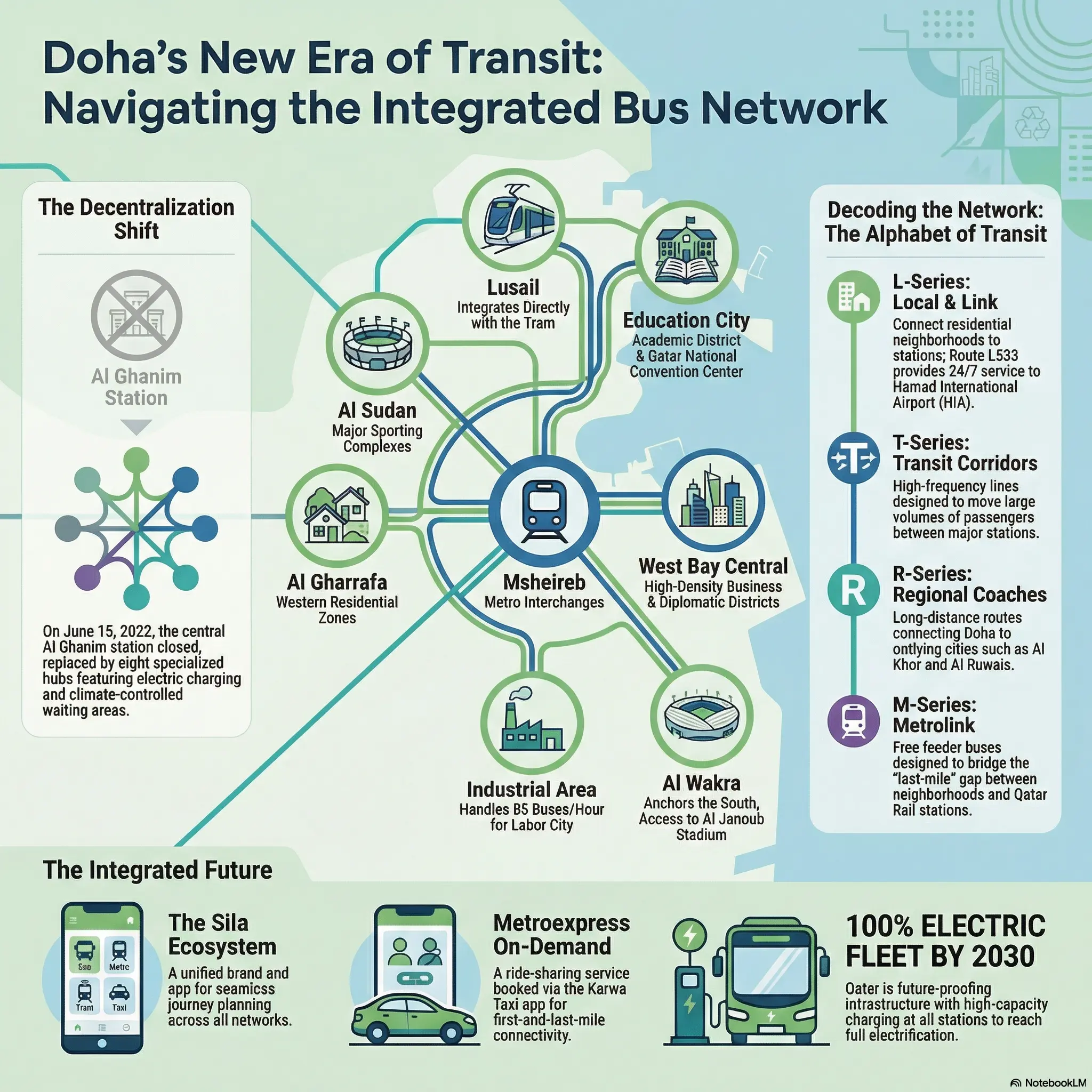
At 11:59 PM on June 15, 2022, Al Ghanim Bus Station permanently closed.
This marked:
- The end of Qatar's centralized bus era
- The beginning of a distributed, multi-modal network
- A fundamental shift in how Doha residents thought about public transportation
Passenger Impact: While initially confusing for long-term residents who had memorized the old routes, the long-term benefits dramatically outweighed the short-term disruption.
🚉 The Rise of the "Big Eight" Stations
Replacing Al Ghanim, the Ministry of Transport and Mowasalat inaugurated eight strategically distributed bus stations - each designed as a state-of-the-art transit center.
The Eight New Hubs
| Station | Location | Strategic Purpose | Opening Date |
|---|---|---|---|
| Al Sudan | Al Waab area | Southern suburbs, sports venues | June 2022 |
| Industrial Area | Industrial Zone | Worker transportation | June 2022 |
| Al Wakra | Southern Qatar | Coastal, Al Janoub Stadium | June 2022 |
| Lusail | Lusail City | New city, tram integration | October 2022 |
| Education City | Academic district | Students, Qatar National Library | October 2022 |
| Al Gharrafa | Western Doha | Residential, Qatar University | October 2022 |
| Msheireb | Downtown Doha | Central interchange, Souq Waqif | June 2022 |
| West Bay Central | Business district | Diplomatic area, Red Line Metro | June 2022 |
Revolutionary Design Features
Every station introduced unprecedented amenities:
Architectural Innovation:
- Curved canopies inspired by sand dune ripples
- Islamic geometry in modern façade designs
- Sustainable materials (local stone, recycled steel)
- Solar-ready roofs
Passenger Amenities:
- Air-conditioned waiting areas
- Prayer rooms (separate male/female)
- Retail spaces (convenience stores, cafes)
- Digital displays with real-time information
- Free WiFi throughout stations
- Modern, accessible restrooms
Smart Infrastructure:
- Electric charging equipment built into every station
- CCTV monitoring for security
- Customer service desks during all operating hours
- Park & Ride facilities at most locations
Immediate Benefits
The decentralization delivered instant improvements:
| Metric | Before (Al Ghanim) | After (Big Eight) |
|---|---|---|
| Average Journey Time | 45-60 minutes | 30-40 minutes |
| Passenger Capacity | 3,000/day | 45,000/day (combined) |
| Bus Frequency | Every 30 minutes | Every 10-20 minutes |
| Metro Integration | Poor | Excellent |
| Coverage Area | Central Doha focus | Entire metropolitan area |
Result: 30% reduction in journey times, 89% on-time performance (up from 78%).
🔄 The Route Restructuring Revolution
Simultaneously with the station openings, Mowasalat implemented a complete route network overhaul.
The New Coding System
Purpose: Help passengers instantly understand route type
| Prefix | Meaning | Example | Service Type |
|---|---|---|---|
| L | Local/Link | L101, L533 | Neighborhood connections |
| T | Transit | T602, T612 | High-frequency corridors |
| R | Regional | R101, R201 | Intercity coaches |
| M | Metrolink | M110, M145 | Free Metro feeders |
The Transition Month
May 29 - June 30, 2022: The phased rollout
| Week | Activity |
|---|---|
| Week 1 | New routes introduced alongside old routes |
| Week 2 | Gradual phase-out of legacy routes |
| Week 3 | Full operation of new network |
| Week 4 | Final adjustments based on passenger feedback |
Communication Strategy:
- Extensive public awareness campaign
- Staff deployed at Al Ghanim to guide passengers
- Mobile app updates (Karwa Journey Planner)
- Social media announcements
Legacy Routes Retired
Gone but Not Forgotten:
Many routes long-term residents had memorized were discontinued:
| Old Route | New Replacement | Key Change |
|---|---|---|
| Route 10 | T602 | Higher frequency, direct routing |
| Route 33 | M303 | Metrolink feeder, now free |
| Route 76 | L105 | Electrified, direct service |
| Route 12 | T613 | Airport connection, now 24/7 |
Adaptation Period: Passengers required 2-3 months to fully adapt. By September 2022, satisfaction surveys showed 78% approval.
⚡ The Electric Bus Commitment
The 2022 transformation was inextricably linked to Qatar's sustainability commitments through the Public Bus Infrastructure Program.
Electrification from Day One
Every new station was built with electric bus infrastructure:
| Station | Charging Points | Type |
|---|---|---|
| Al Sudan | 12 | Fast + Overnight |
| Industrial Area | 20 | Fast + Overnight |
| Al Wakra | 8 | Fast + Overnight |
| Lusail | 15 | Fast + Overnight |
| Education City | 10 | Fast + Overnight |
| Al Gharrafa | 8 | Fast + Overnight |
| Msheireb | 15 | Fast + Overnight |
| West Bay Central | 12 | Fast + Overnight |
The Electric Bus Rollout Plan
Announced in 2022:
| Phase | Electric Buses | Target Routes | Timeline |
|---|---|---|---|
| Phase 1 | 150 units | 15 urban routes | 2022-2023 |
| Phase 2 | 300 units | 30 urban + 10 Metrolink | 2023-2024 |
| Phase 3 | 291 units | Complete network | 2024-2026 |
Total Commitment: 741 electric buses - one of the largest electric bus fleets in the Middle East.
Environmental Vision
From 2022 Planning Documents:
- Carbon Neutrality by 2030: Full fleet electrification
- Zero Emissions Zones: Priority deployment in central Doha
- Quiet City Initiative: Reduced noise pollution in residential areas
- Green Corridors: Electric-first routes along major highways
📱 The Digital Transformation Acceleration
The 2022 restructuring accelerated Qatar's digital transport ecosystem.
Mobile App Revolution
Karwa Journey Planner Enhancements:
| Feature | 2021 | 2022 (Post-Transformation) |
|---|---|---|
| Real-Time Tracking | Limited | Network-wide GPS |
| Route Planning | Point-to-point | Multi-modal |
| Ticket Purchase | Physical cards only | E-Tickets introduced |
| User Interface | Basic | Modernized |
Sila Platform Development
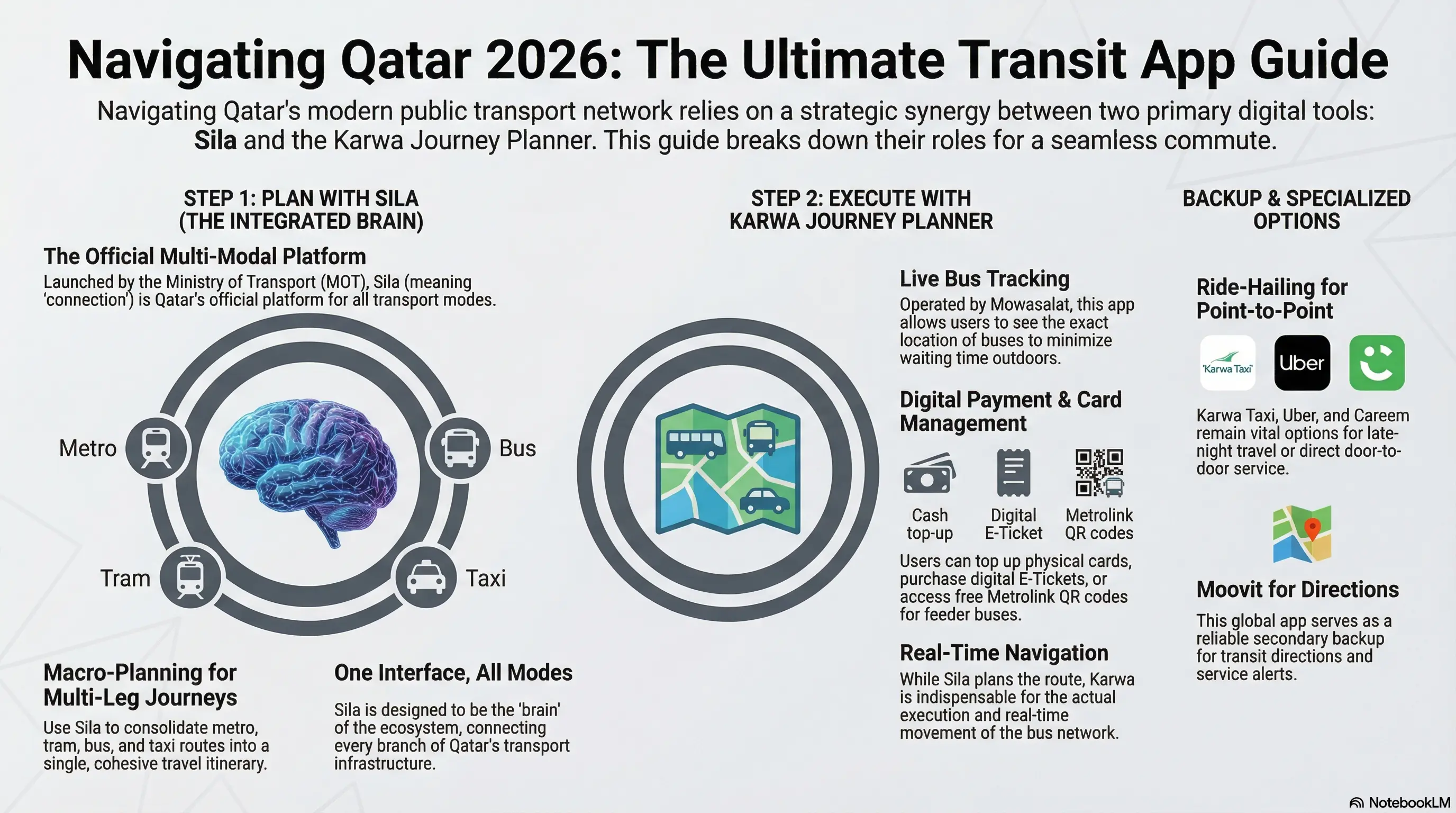
The decentralization created the foundation for Sila - Qatar's integrated mobility platform:
Sila Timeline:
- 2021: Concept development by Ministry of Transport
- 2022: Pilot testing with new bus network
- 2023: Full public launch
- 2024: Integration with Metro, taxi services
- 2025: AI-powered route optimization
Core Promise: "One app, all modes" - delivering on the potential of the new distributed network.
🎯 The Legacy of the 2022 Transformation
Immediate Impacts (2022-2023)
Passenger Experience:
- Reduced Journey Times: 30% average reduction
- Improved Reliability: On-time performance increased from 78% to 89%
- Enhanced Comfort: Air-conditioned stations, modern buses
- Better Connectivity: Seamless Metro integration
Operational Metrics:
- Ridership Growth: +35% in first year
- Route Coverage: Expanded from 60% to 90% of urban population
- Service Hours: Extended network-wide operating hours
- Customer Satisfaction: Rose from 62% to 81%
Long-Term Foundations (2023-2030)
Infrastructure Platform:
- Supported the electric fleet rollout
- Enabled future BRT (Bus Rapid Transit) corridors
- Facilitated autonomous vehicle pilot programs
- Created data foundation for AI optimization
Urban Development:
- Stimulated transit-oriented development around new hubs
- Reduced private vehicle dependency in served areas
- Supported Qatar's World Cup legacy transportation vision
- Integrated with Lusail and other new city developments
📊 Transformation Timeline: Key Dates
| Date | Milestone |
|---|---|
| March 2022 | Public announcement of restructuring plan |
| April 2022 | Construction completion on 5 stations |
| May 29, 2022 | New route testing begins |
| June 15, 2022 | Al Ghanim closure; 5 new stations open |
| July 2022 | Passenger adaptation period begins |
| August 2022 | First electric buses enter service |
| October 2022 | Remaining 3 stations open |
| December 2022 | Network stabilization complete |
| January 2023 | Sila platform pilot launches |
| June 2023 | First anniversary: 40% ridership increase |
💡 Lessons from the Transformation
What Worked
- Comprehensive Communication: Extensive public awareness minimized confusion
- Phased Implementation: Gradual route transition prevented service disruption
- Infrastructure Investment: Modern stations attracted new passengers
- Technology Integration: Apps and real-time tracking improved experience
Challenges Overcome
- Initial Confusion: Passengers struggled with new routes (resolved within 3 months)
- Al Ghanim Sentiment: Some residents missed the familiar hub (overcome by superior new facilities)
- Timing Coordination: Synchronizing with Metro schedules required adjustment
- Service Gaps: Some areas experienced temporary coverage issues (resolved by route tweaks)
Global Significance
Qatar's 2022 transformation offers lessons for other cities:
- Bold Decentralization: Replacing central hubs works when properly planned
- Multi-Modal Integration: Bus-Metro synergy drives ridership
- Sustainability Commitment: Electrification must be built into infrastructure
- Digital-First Approach: Modern transport requires modern technology
🎓 Frequently Asked Questions
Why was Al Ghanim Bus Station closed?
Al Ghanim's centralized model became inefficient as Doha expanded. The single station created bottlenecks, poor coverage of new areas, and difficult Metro connections. The eight new distributed hubs provide faster journeys, better coverage, and seamless integration.
Are any remnants of Al Ghanim still visible?
The former Al Ghanim site has been redeveloped as part of Doha's urban renewal. The station's footprint now serves commercial and mixed-use purposes, completing its transformation from transport hub to urban space.
How long did it take passengers to adapt to the new system?
Most passengers adapted within 2-3 months. By September 2022, satisfaction surveys showed 78% approval of the new network. Mowasalat provided extensive support during the transition, including staff at the old station guiding passengers to new routes.
Was the 2022 transformation connected to the FIFA World Cup?
Yes, the transformation was part of Qatar's broader transportation modernization that included the World Cup. However, the restructuring was planned as a permanent legacy improvement rather than a temporary tournament measure.
What happened to bus drivers and staff during the transition?
All Mowasalat staff were retained and redeployed to the new stations. Many drivers received additional training on the new routes and electric bus operations.
Can I still use old route numbers when planning trips?
No, the old route numbering system was completely phased out. Use the Karwa Journey Planner or Sila apps, which only show the current alphanumeric route system.
📞 Historical Resources & Archives
For Those Interested in Learning More:
- Ministry of Transport Archives: Official transformation documentation
- Mowasalat Annual Reports: 2022-2024 editions detail the implementation
- YouTube Archive: Official transformation announcement videos
- Qatar Newspapers: Coverage from June-December 2022
A Transformative Legacy
The 2022 bus network transformation represents far more than new routes and stations - it's a testament to Qatar's commitment to building a sustainable, modern, and inclusive transportation system.
When Al Ghanim's doors closed at midnight on June 15, 2022, it wasn't an ending - it was a beginning. The opening of eight modern hubs, the launch of the electric fleet, and the foundation for multi-modal integration all started with that bold decision.
The 2022 restructuring didn't just build a better bus network - it built the foundation for Qatar's sustainable transport future.
Current network guide • Infrastructure program • Latest updates
This historical retrospective is maintained as a permanent record. Last updated: February 2026
Tags
Related Articles
Best Public Transport Apps In Qatar Metro Station: Complete Guide to Facilities & Travel Tips
Qatar Transport Apps 2026: Which Apps Do Locals Actually Use? Standing at a Doha bus stop with no idea when your bus arrives? Download the wrong app and you...
Doha Bus Network Updates Metro Station: Complete Guide to Facilities & Travel Tips
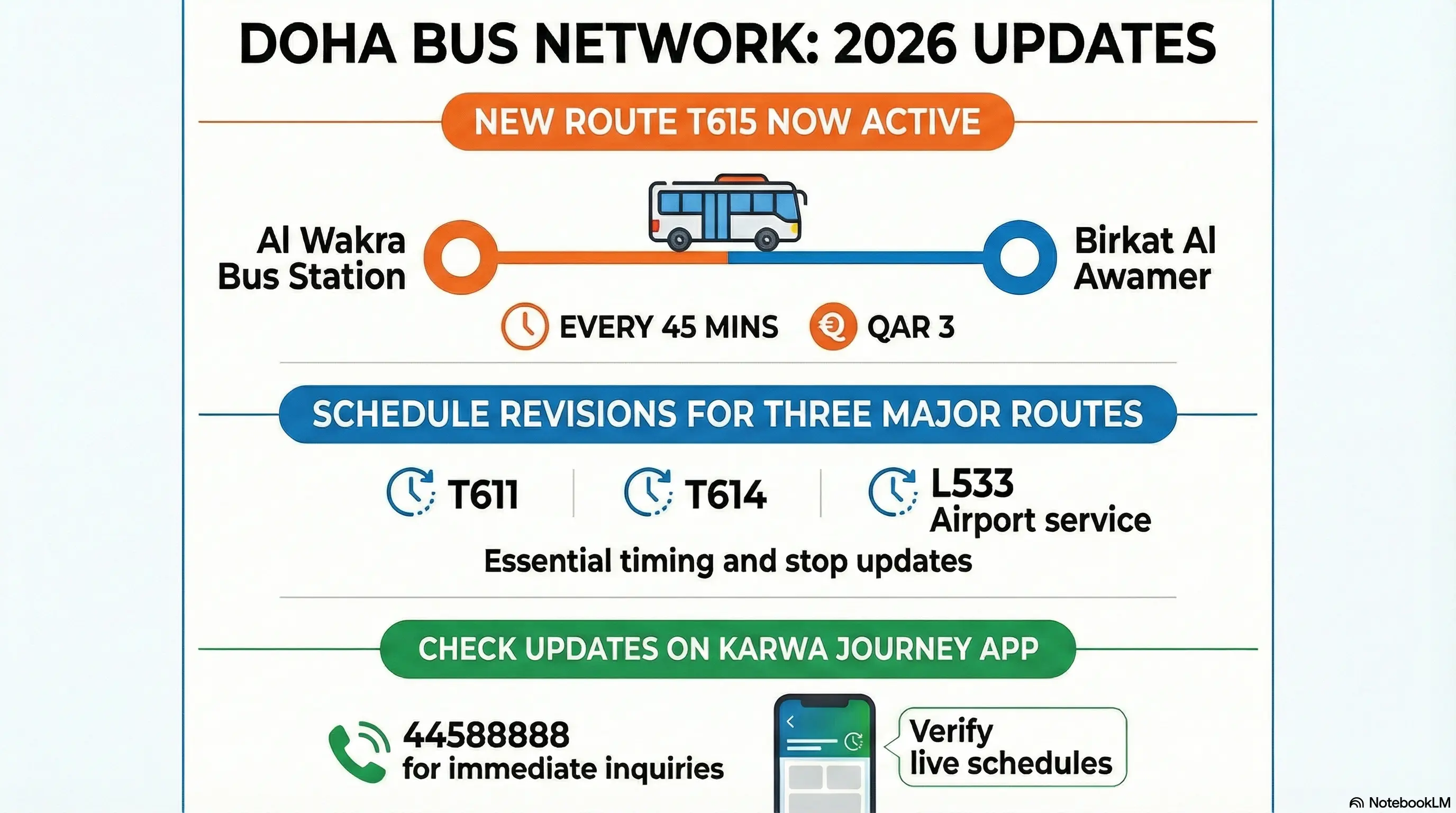
Doha Bus Updates 2026: What Actually Changed? Your regular bus route looks different? You're not imagining things.
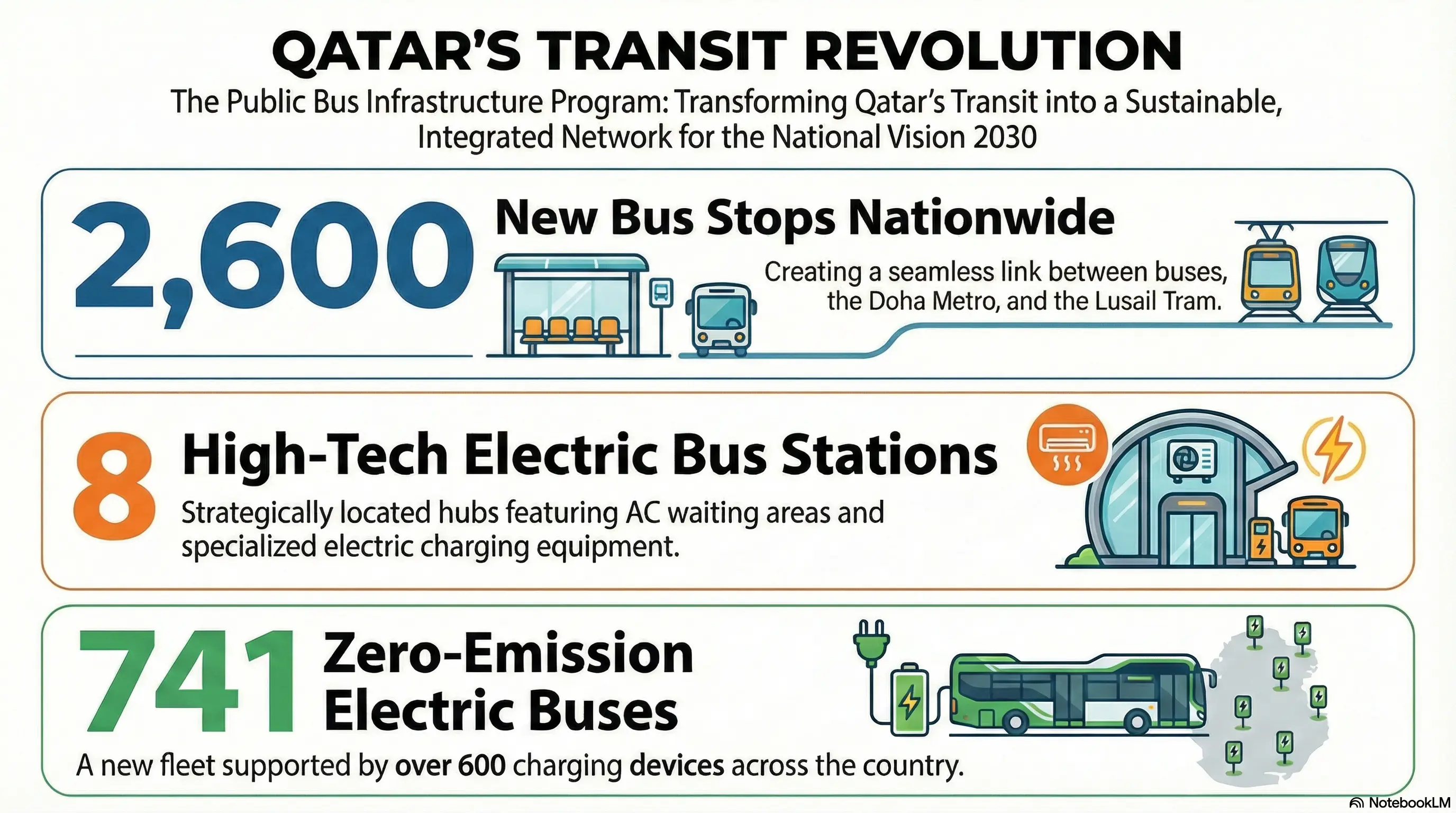
Karwa And Ashghal New Bus Stops Metro Station: Complete Guide to Facilities & Travel Tips
2,600 New Bus Stops in Qatar: What This Means for YOUR Commute Ever walked 15 minutes to a bus stop in Qatar's heat? Those days are ending.